Monday, July 2, 2007

Day 9: School Board

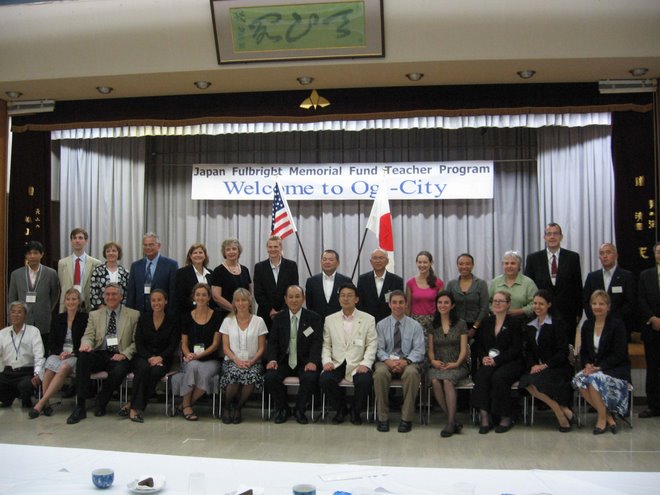
We met with the Ogi school board this morning. The 5 main objectives of the board are as follows: Promotion of school learning, provision of solid family support and pre-school education, promotion of enriching lifelong learning and sports, passing on of traditional Japanese culture and promotion of local heritage, maintenance and improvement of educational environments.

The meeting was very informative and I will just write a few things that I found interesting. Classes here are large, with the cap being at 40. Students are required to participate in after school club activities. There are a huge number of clubs to choose from, including table-tennis, baseball, orchestra, art, and martial arts. Because of club activities students don’t leave school until 5:00. Teachers are usually there until 7:00.

In Ogi, 21% of the local budget is allocated for education. The meeting made us all eager for the coming school observations we will participate in.

Before heading back to Saga we were treated to a Japanese lunch of lots of seafood, both raw and cooked. We then stopped at the local sake (sah – kay) brewery. Sake is wine made from fermented rice. We also saw the Yokan museum (that’s the sweet bean and seaweed gelatin candy). There was plenty to sample, some of which was not very good, and some of which wasn’t too bad.

Back in Saga, two other people in my group and I met up with Aya. We met Aya at Saga University, where she is a graduate student. She speaks excellent English and is a lot of fun. In classic Japanese fashion, Aya came bearing gifts, including some pottery that her dad made. We drove into the hills behind Ogi until we found a little town with a lot of hot springs, called onsen. Japanese onsen are a must try for any visitor. After our visit to the onsen, we were invited by the owner to go see fireflies at the river. This was my first time seeing fireflies and I was quite impressed. There were a couple of local children there and they would come up to me and tug on my leg to get my attention. Then they would hand me the fireflies they had caught in their little hands.

Day 10: Ogi Junior High

At Ogi Junior high we got our first experience inside a Japanese school. The school has 639 students. I, along with the three other art teachers in my group, was drawn immediately to the art room, where students were busy working on geometric line drawings. I was impressed at the behavior of the students, and surprised when they rose to bow at the teacher at both the beginning and end of class. The teacher did not speak English, so we went and found our group interpreter. I asked about the obvious emphasis on Western art, and why Eastern and traditional Japanese art was not being taught. He explained that Western art is based on elements and principals that are essential to learning basic skills. Eastern art, however, is based on religion and philosophy. He told us that students that are serious about art will study Eastern art in more advanced classes.

After a while in the art class, I stopped by a Japanese class. Students were discussing stereotypes. Some interesting stereotypes of Americans: golden hair, big noses, wide open eyes, and high calorie food. Before I entered the class they had asked some others from my group about some stereotypes of Japanese people. One of their replies was “always taking pictures.” This made the kids laugh, as all twenty of us Americans were toting cameras and taking pictures of just about everything.

Lunch was served in the classroom. I was assigned a class and given a special helper to walk me through the process. There are no lunch ladies in Japan. The students, wearing aprons and masks, do the work. We had bean curry, rice, vegetables, and milk. My helper got it all for me. Before eating, the class says, together, “i tadakimasu,” which essentially thanks those who prepared the food. When the meal was done, bowls, trays, and eating utensils and rinsed and placed in bins by the kids. Milk cartons are also rinsed, then torn open and flattened out for recycling. It was all done by students – amazing. After lunch we had a meeting with the school administration and a few teachers. We asked questions for the next two hours. We found out that it is not uncommon for teachers to come n on weekends in order to keep up with their duties. Teachers are not just teachers, they also take active roles in the lives of students. Teacher communication is fostered by a large room that is home to all of their offices. There are no cubicles, just desks where they work. This is the same in all schools.

Day 11: Mikatsuki Elementary

We arrived at the elementary a little bit early so we could be there as students arrived. I sat on the steps in front of the school and soon was surrounded by little kids who challenged my abilities at rock-paper-scissors. When school started we were met with a warm welcome of 1,000 cheering kids, all sitting neatly on their bumbs in the gymnasium. It was the closest I will ever come to feeling like a star. After our introduction a little sixth grade girl stood and welcomed us in English. She had prepared a speech and read it perfectly. I felt my eyes getting damp. The kids sang us their school song and we left to more cheering. I was assigned a class and did my best to introduce myself using the chalk board. I stayed in the class most of the day. Lunch was just like the junior high, very disciplined and efficient. We left the room once to go to the music room, where students sand and played the recorder for the music teacher. During math another teacher who must specialize in the subject came in and “team” taught. I stepped out for a minute to observe a class that was doing an art project. They kids were learning wood-block printing and were in the first stages of drawing their eventual print. Something that most of us noticed and asked about when we met with teachers after school was the lack of computers in the classroom. It was the same at the junior high. Each school had a computer lab, but none of them were being used. This seemed odd in such a technologically advanced country. The teachers explained that this is a problem that the government is looking into. They said that kids learn to use computers at home. Eventually, when they graduate college, companies will train them according to what they need to know specifically for their work.

This evening I went to dinner with a few others in the group. We found a place where the waitress, cook, and greeter were the same person. She was an old heavy set woman with a raspy voice and warm smile. She and her husband run the place. It was a place where the locals eat. We ended up pointing to someone else’s food in order to tell her what we wanted to eat. I had some stir-fried veggies with rice and miso soup. It was delicious.

Day 12: Ushizu High School

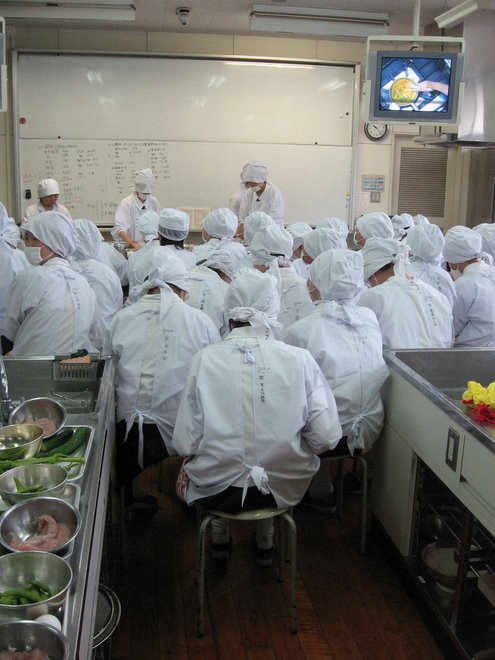
Ushizu High School is a public school that specializes in three courses: Life management (nursing and home economics), fashion design, and Dietetics (culinary arts and nutrition). The school has 470 students from all over Saga Prefecture. Only 44 of the students are boys. Upon graduation, 40% of students go on to universities and 60% find jobs in their line of study. Students are not allowed to work while attending the school.

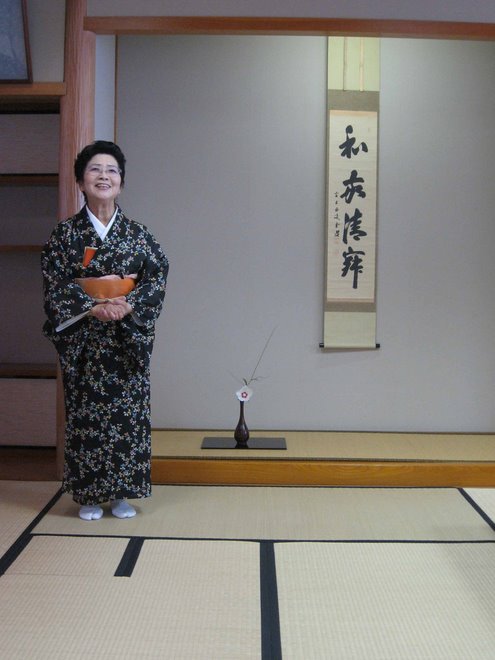
After a lunch that consisted of several local delicacies that included whale skin and some sort of weird looking sea creature, we were treated to a Japanese tea ceremony. The room where the ceremony was held had been furnished with tatami mat floors and traditional paper walls. The room is used specifically for teaching students the way of the tea ceremony and we were rare guests. The teacher was dressed in a beautiful kimono. As the ceremony proceeded, she taught the basics of manners and tradition. On display was a scroll with calligraphy and ikebana which is a flower arrangement that represents earth, life, and the heavens. The scroll had four Chinese characters which meant harmony, respect, purity, and tranquility. The purpose of the tea ceremony is to provide all participants a guide toward the realization of genuine peace.

Days 13/14: The Homestay

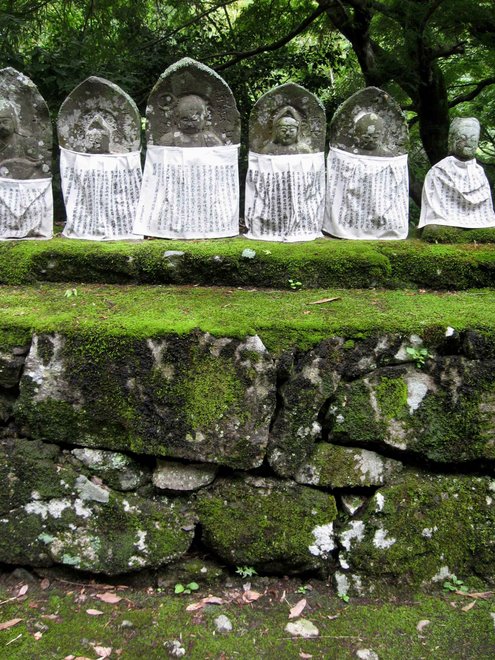
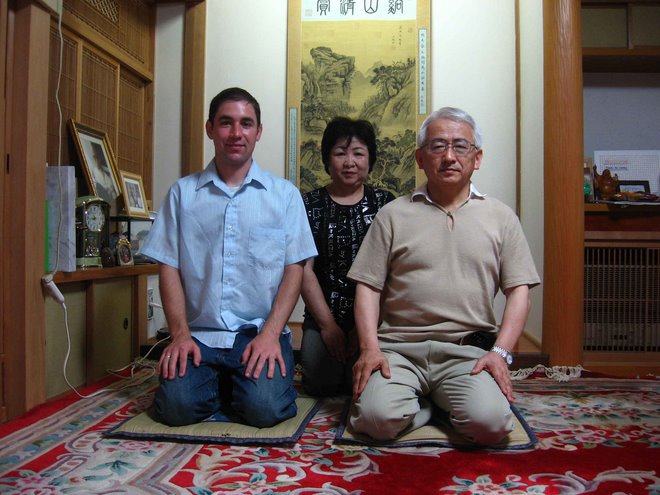
In order to provide each of us with a genuine Japanese experience, we were all given the opportunity to spend two days and a night with a Japanese family. My family was a middle-aged couple whose children were grown and out of the house. My host mother, Mariko-san (san is a word added to names as a sign of respect) is a piano teacher and my host Father, Koizi-san, an office worker. The morning we all met I was a little bit nervous, and I’m sure they were too. That all disappeared moments after we greeted each other. Koizisan and Marikosan were very kind and made me feel right at home. Koizisan spoke enough English to allow for some good communication. I soon learned about their children, jobs, and hobbies. They reminded me of my own parents. As soon as we arrived at their house, I was treated to lunch of cold udon noodles, which were dipped in a glass of iced soy sauce. I had a little bit of trouble using chopsticks with the slippery noodles, so Marikosan got me a fork. In Japanese households people leave their shoes at the door and step into slippers. When lunch was over, we drove in to Saga and went to the painting museum, history museum, and castle museum. We then went to Kiyomizu waterfall. It required a small hike and I was amazed by the lush forest and countless Buddhist and Shinto statues and shrines. For dinner Marikosan made sukiyaki, which was absolutely delicious. In a frying pan she cooked onions, cabbage, and thin sliced beef in soy-sauce and sugar. I was shown how to break a raw egg into a bowl and whisk it with my chopsticks. When the meat and vegetables were cooked, they were dished into the bowl with the egg. The hot temperature of the meat cooked the egg that coated it. I ate and ate and ate until I couldn’t eat any more. It was yummy! After dinner I was shown where I would be sleeping. A futon had been pulled out of the closet and onto the tatami mat floor. I slept great and anticipated the trip we would take the next day to Arita. Breakfast in the morning was an omelet that I thoroughly enjoyed. When I finished, Kiozisan got a twinkle in his eye and asked me if I had ever tried natto. I told him no. He then asked if I had tried noni or sour plums. I again said no. Soon Marikosan appeared with all three. Koizisan informed me that these were the three things he heard Americans didn’t like to eat for breakfast. Then he asked if I wanted to try. I said sure, and dipped my chopsticks into the natto, which are fermented soy beans that have excreted a sticky syrup. Koizisan watched in delight as I placed them in my mouth and swallowed hard. Then came the nori, small strips of seaweed paper that are dipped in soy sauce and eaten with rice. The nori was actually quite good and I even had seconds. I can’t say that about the sour plums. One of those put a look on my face that had Koizisan and Marikosan laughing out loud.

Arita is a small town where world famous porcelain is made. Our destination was the ceramics museum, which has an amazing display of historical and contemporary pottery. We spent a good amount of time at the museum and then headed into town to see some galleries.

At 3:00 PM we met back up with the others from my group and their host families for the goodbye reception. It was the end of a brief but incredible experience I will never forget. As our bus pulled away all of the host families waved goodbye with both hands until we could see them no more.

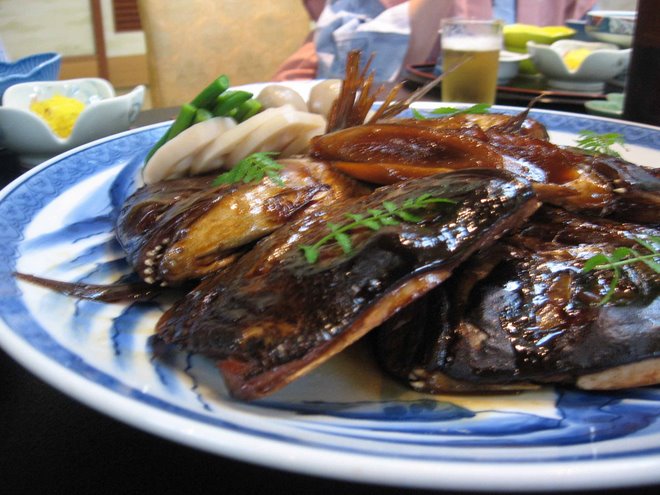
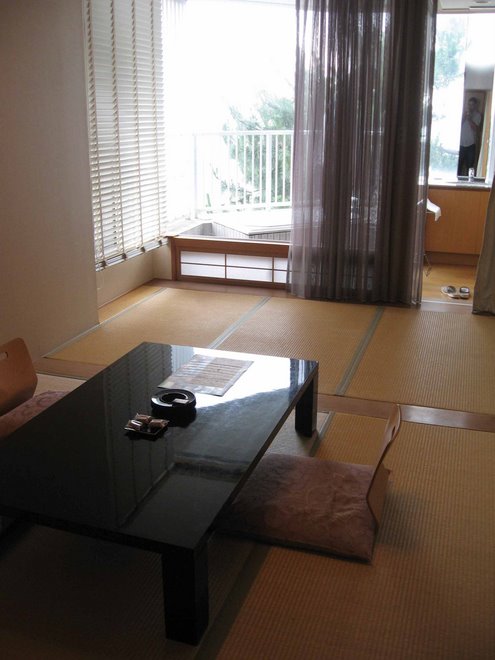
From the reception we headed straight to Karatsu for a stay in a ryokan, a traditional Japanese inn. Every ryokan has rooms with tatami mat floors, an onsen, and yukatas for all its guests. Our ryokan was on the beach with a view of the Sea of Japan and Karatsu castle, one of only four original castles in Japan. Karatsu is also known for its own style of pottery, which is simple in design. Dinner was a traditional banquet where we were once again treated to all sorts of raw and cooked sea things. The most interesting had to be the plate with a fish head and tail but nothing in the middle. After dinner most of the group stayed for karaoke, which is extremely popular in Japan, but I opted instead for a walk along the beach and a dip in the onsen.

Day 15: Back to Tokyo

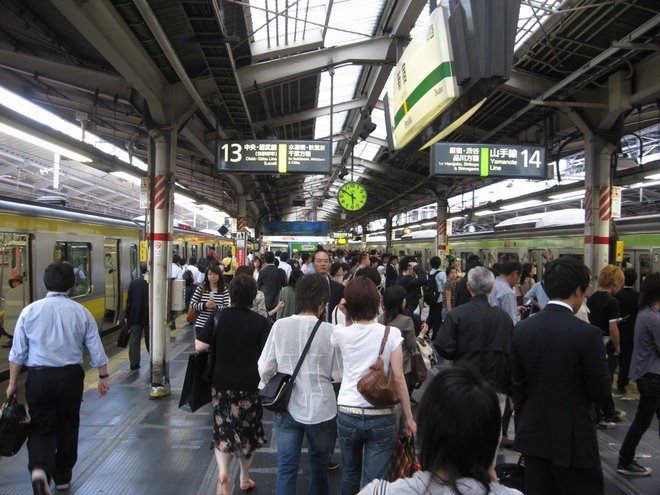
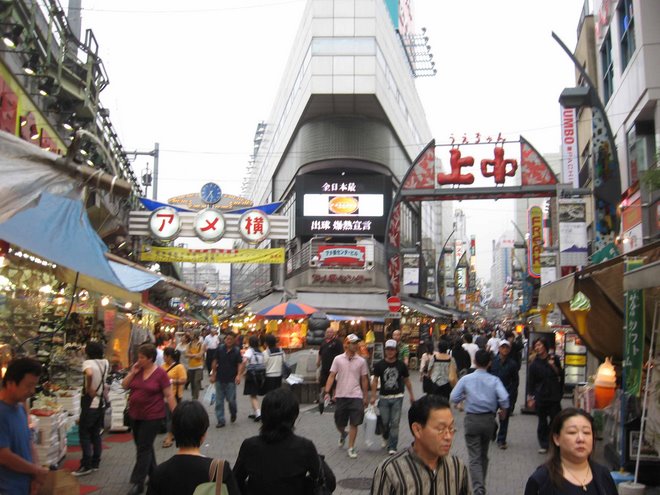
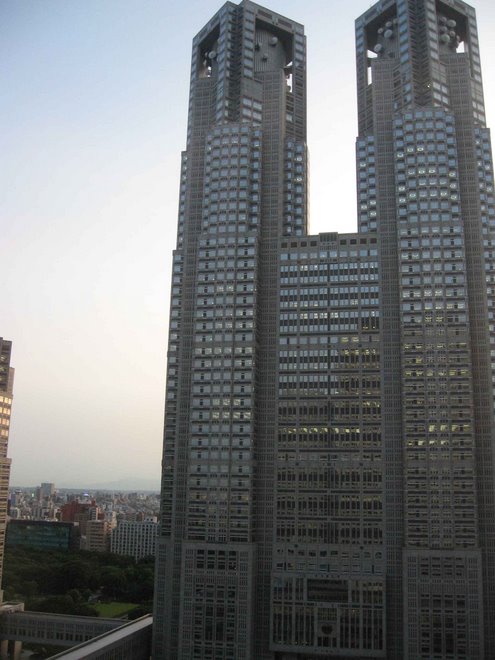
After a relaxed morning at the beach, we all headed back to the airport for a return flight to Tokyo. In Tokyo we met all the people that had gone to different places and swapped stories and experiences. We also did some shopping for souvenirs (kimonos, fans, pottery, and chopsticks were popular items.

Day 16: Closing Reception

This morning I attended a seminar about art education in Japan. The presenter was Chihiro Tada, who is the director of the Art Education Institute and the National Toy Museum. He spoke about the need for everyone to have some time to play, both children and adults. He talked about the growing concern over time spent on computers, playing video games, reading comic books, and watching TV. In Japan, kids spend 2,000 hours a year doing those four things. Compare that to the 700 hours spent studying in school. He closed with “I believe that art education is as important as three meals a day. It is very important for the body and the spirit.

In the afternoon we had one last question and answer period about the education system of Japan. Emphasis was placed on “exam hell” and how preparing for tests seems to control what is taught in the classroom. Overall, the school system in Japan is very similar to what I grew up with, minus the high school entrance exam.

Day 17: Wrapping It Up

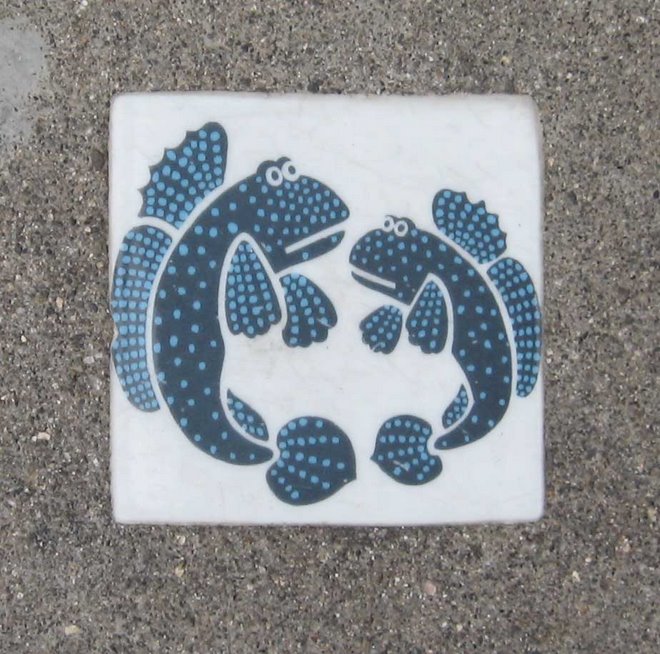
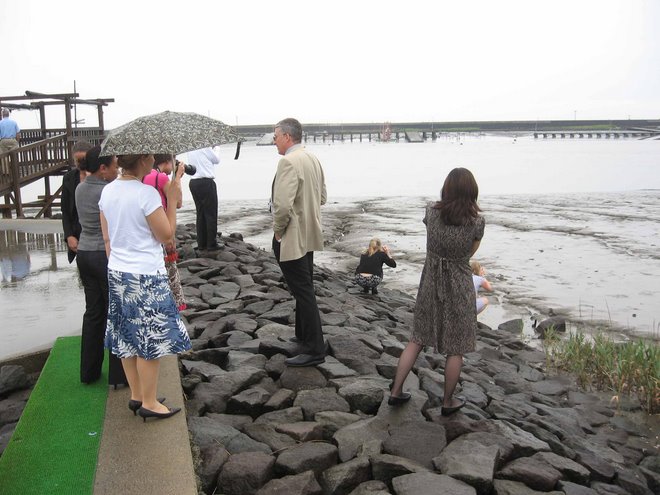
Today each group did a presentation on their experiences in their host cities. The presentations were very impressive and it was evident that everyone had their own special experience. For our presentation we performed a comical kyogan play about mudskippers. We then showed slides of the incredible people and scenery of Ogi and Saga. To end it, one woman in the group shared an experience she had with her host family. Soon after she met her host father they discovered that his father had been a soldier in the Japanese army during the war and this woman’s father had been an American soldier. The host father quickly said “We must go to Nagasaki.” The following morning they got up early and made the two hour drive to the city where the second atomic bomb was dropped. As the two stood in the Peace Park, at ground zero, they could not control their emotions. Sixty-two years after the war had ended, the children of two enemies stood together as friends on sacred ground.

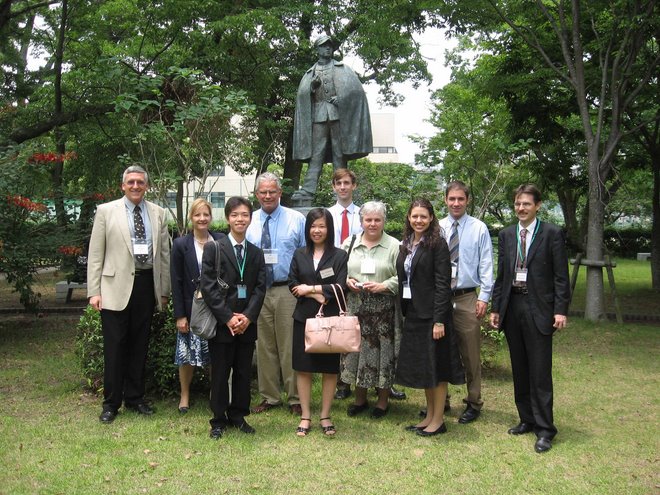
The night ended with a closing reception. There were many hugs and even some tears as we all said our goodbyes, promising to make our new friendships last.

In Reflection:

It is hard to put into words the experience I had in Japan. Perhaps I will share an experience that I had. On my first morning in Saga I went for a walk.. There were very few people out and I found myself alone on a street except for a little elderly woman who was walking in my direction. I decided to greet her with a bow. She returned the bow and then looked up at me with a huge smile and sparkling eyes. She then said good morning in that sweet, sincere way that Japanese people do. “Ohiyo gozaimasu.” I won’t soon forget that greeting. There is a Japanese saying that goes something like “when words cannot be understood, the language of the heart can.” That old woman spoke to me with her heart. She said to me “Welcome to my country, my beautiful landscapes, my fascinating culture, and my wonderful people.” At that moment I grew a true love for Japan. I will forever be impressed for their desire for peace, their love of nature, and their respect for body and spirit.

A special thanks to all of those who made this trip possible, and to Laurasan, our guide, guardian, interpreter, and friend.